Blog
Glass skin: how to get glass skin, no filter?
Glass skin, or skin glass: the Korean evening and morning routine, step by step, and what comes down to skincare versus makeup.
Key takeaways
- Glass skin describes skin so hydrated, smooth and even that it seems to reflect light like a window.
- In the evening, the routine layers textures from the thinnest to the richest: this is layering.
- Over-exfoliating makes skin red and irritated, the American Academy of Dermatology warns.
- In the morning, the routine is lighter and ends with sunscreen.

Glass skin, the Korean look that seems to catch the light on every screen. In photos, though, a good part of the effect comes from highlighter and lighting. What comes down to skincare is lasting: well-hydrated skin, built with thin layers and gentle gestures repeated morning and evening. So to learn how to get glass skin with no filter, it is better to look at the routine than at the screen: four steps in the evening, four in the morning, each with its reason for being there.
Glass skin or skin glass: what are we talking about?
Glass skin describes skin so hydrated, smooth and even that it seems to reflect light like a windowpane. You also see "skin glass" in online searches, for the same idea, and Koreans talk about chok chok skin, skin full of water. It is not skin without pores or texture, which nobody has, but well-hydrated skin with a refined texture and an even complexion.
What comes down to skincare, what comes down to makeup
In a photo, glass skin blends skincare, makeup and light, and only the middle column depends on your routine.
| What you see | What comes down to skincare | What comes down to makeup or the photo |
|---|---|---|
| Radiance | Layered hydration, well-nourished skin | Highlighter, luminous primer, front lighting |
| Smooth texture | Gentle, spaced-out exfoliation | Primer, smoothing filter |
| Even complexion | Radiance actives, daily sunscreen | Foundation, concealer |
| Plump look | Humectants, ceramides, cream | Cream blush, photo angle |
The evening glass skin routine, step by step
In the evening, the glass skin routine layers textures from the most fluid to the richest, letting each one sink in before the next: this is layering. The principle relies on two families of ingredients described by a 2017 Indonesian review on moisturizers. Humectants, such as glycerin or hyaluronic acid, draw water into the outer layer of the skin. Occlusives then form a film that slows evaporation, and they work better on skin that is still damp.
-
Double cleansing
An oil first, to dissolve sunscreen and makeup, then a gentle water-based cleanser, rinsed off with lukewarm water. Your face should stay supple after rinsing, with no tight feeling (see our article on double cleansing).
2 min
-
Toner, in two or three passes
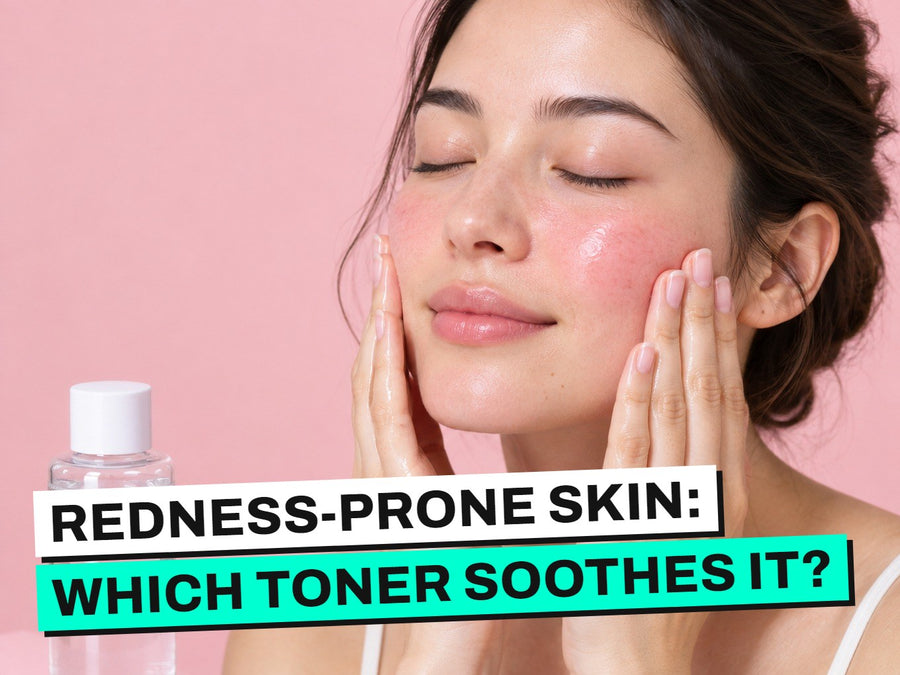
Pour a few drops into your palms, pat without rubbing, then repeat once the first layer has absorbed. A very water-rich toner works well here: for example, the MIDHA Rice Pure Toner contains 77.5% rice bran water, according to its ingredient list. On evenings when your skin is doing well, one pass is enough.
1 min
-
Essence or hydrating serum
A fluid texture takes over on skin that is still slightly damp. Look in the ingredient list for humectants and ceramides, the lipids of the skin barrier: for example, the Anua 7 Rice Ceramide Hydrating Barrier Serum combines glycerin, hyaluronic acid and ceramides.
1 min
-
Cream, to seal it in
Cream comes last, in a thin layer, to hold in the water from the previous steps. Its texture depends on your skin: a gel cream for combination skin, such as the Dr Ceuracle Vegan Kombucha Tea Gel Cream, a more enveloping cream for dry skin. If the formula contains niacinamide, that is a plus: applied to the skin, it increased ceramides and reduced water loss in dry skin, in a 2000 Japanese study.
1 min
In the morning, a shorter glass skin routine
In the morning, the glass skin routine gets lighter and ends with sunscreen, the step that preserves skin texture and an even complexion over time (see our article on the morning and evening skincare routine).
-
A rinse or a gentle cleanser
Lukewarm water is often enough for normal or dry skin; oily skin may prefer a gentle cleanser. Pat dry with a clean towel, without rubbing.
1 min
-
One layer of toner
A single pass, patted in with the fingertips, rehydrates the surface of the skin after the night.
30 s
-
A light serum, then cream
The same families of ingredients as in the evening, in thinner layers, so that makeup goes on afterward without pilling.
2 min
-
Sunscreen, every morning
In an Australian trial published in 2013, the skin of adults who applied sunscreen every day aged less over four and a half years than that of people who used it as they pleased (see our article on Korean sunscreen).
1 min
At Fiveaven, we see glass skin as a direction rather than a goal: gentle, consistent gestures for well-hydrated skin, without trying to look like a retouched photo.
Your questions
Is glass skin possible with enlarged pores or textured skin?
Yes, if you aim for well-hydrated skin with a refined texture and an even complexion, and not skin without pores or texture, which nobody has. In photos, very smooth texture also comes from primer and smoothing filters.
How long does it take to get glass skin?
No routine sets a timeframe. A cream makes skin feel supple as soon as you apply it, but skin texture is judged over time, with consistent habits.
Can you get glass skin with oily skin?
Yes, because oily skin can also lack water. Light textures, double cleansing in the evening and a gel cream instead of a rich cream bring water without leaving a greasy film.
Which products to use for glass skin?
Cleanser, toner, serum, cream and sunscreen already make a complete routine, without going as far as ten steps (see our article on the 10-step myth). In the ingredient list, look for humectants, such as glycerin or hyaluronic acid, and ceramides.
Can you get glass skin naturally, at home?
The steps, yes: the whole routine described here is done at home. Homemade rice water does not replace a rice toner, though. It has no preservative and no stability testing, whereas a cosmetic sold in the European Union must have a safety report before it is placed on the market, as the European Commission points out.
Sources
- Purnamawati S. et al., "The Role of Moisturizers in Addressing Various Kinds of Dermatitis: A Review", Clinical Medicine & Research, 2017.
- Tanno O. et al., "Nicotinamide increases biosynthesis of ceramides as well as other stratum corneum lipids to improve the epidermal permeability barrier", British Journal of Dermatology, 2000.
- American Academy of Dermatology, "How to safely exfoliate at home", aad.org, 2026.
- Hughes M. C. et al., "Sunscreen and prevention of skin aging: a randomized trial", Annals of Internal Medicine, 2013.
- European Commission, "Legislation" (Cosmetics section), Internal Market, Industry, Entrepreneurship and SMEs, 2026.