Blog
Damaged Skin Barrier: How to Repair It Gently
Damaged skin barrier: the signs, how long it takes to rebuild, the ceramide products that strengthen it and a step-by-step routine.
Key takeaways
- The skin barrier is a wall of cells held together by lipids: half of them are ceramides.
- Stinging, tightness after moisturizer and redness signal a weakened barrier.
- Young skin rebuilds 80% of its barrier in three days; sleep and a gentle routine support it.
- A break from strong actives, a cream with ceramides, cholesterol and fatty acids, then a gradual return.

Your skin stings under your usual cream, turns red at the slightest thing, feels tight even after moisturizer: these signs often point to a weakened skin barrier. This barrier is the outermost layer of the skin, much thinner than a sheet of paper, which holds in water and keeps irritants out. The skin knows how to rebuild it on its own, in a few days, as long as you give it the time and the means. A simplified routine, products rich in lipids similar to its own and a break from strong actives are often enough. Discover how the skin barrier works, how to tell it is damaged and how to support it step by step.
The skin barrier: bricks and mortar
The outer layer of the skin, which dermatologists call the stratum corneum, looks like a wall. The bricks are flattened cells, filled with small molecules that attract water. The mortar holding them together is made of lipids, arranged in tight layers. A University of California review published in 2007 gives the recipe: half of these lipids are ceramides, a quarter cholesterol, and about 15% free fatty acids. This mortar is what keeps water from escaping and slows the entry of irritating substances.
The surface of the skin is also slightly acidic. A 2006 Dutch study puts its natural pH at around 4.7, and shows that skin with a pH below 5 has a better barrier, better hydration and less scaling. This acid film, the lipid mortar and the water-filled cells together form what is called the skin barrier.
The bricks have their role too: a 2007 review on skin hydration explains that surface cells contain a natural moisturizing factor, a mix of small molecules that hold water, and that glycerin itself occurs naturally in the skin. When the barrier lets water escape, the enzymes that detach dead cells work less well: the surface becomes rough and dull. Strengthening the barrier therefore also means getting back smoother, more radiant skin.
50%
of the lipids in the skin's mortar are ceramides, along with 25% cholesterol and 15% free fatty acids. A cream for a weakened barrier benefits from combining these three families of lipids, which the skin already knows. Feingold, Journal of Lipid Research, 2007.
Damaged skin barrier: the warning signs
A weakened barrier lets water evaporate faster and irritants get in more easily. It shows up through fairly recognizable signs:
- Tightness, even after cream, and a feeling that your skin is "too small" (see our article dry or dehydrated skin).
- Stinging or burning when applying products you usually tolerate well.
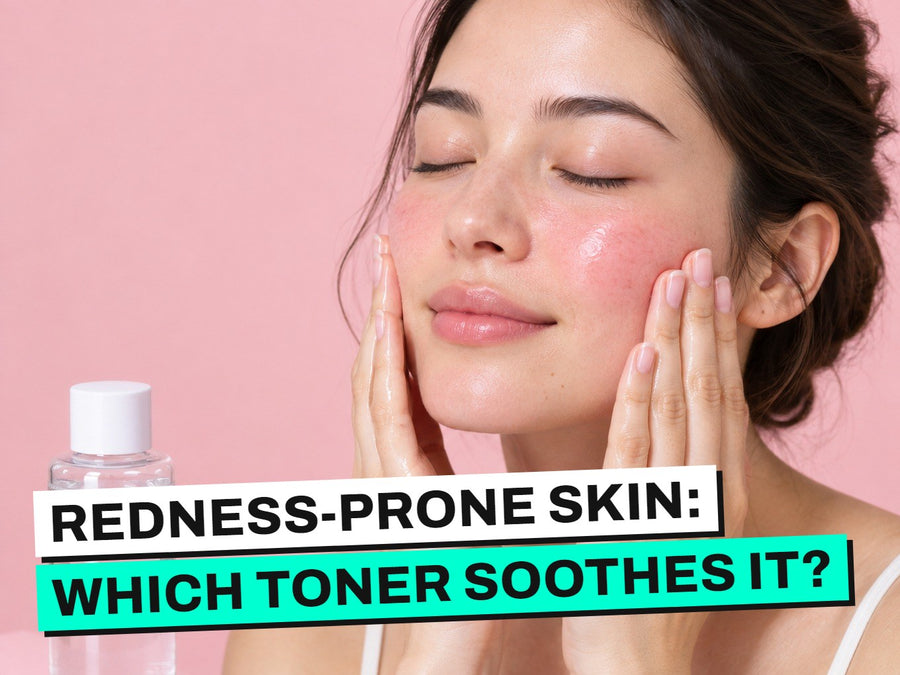
- Diffuse redness, especially on the cheeks and around the nose.
- Rough skin that peels in places, or on the contrary shiny and tight skin.
The simplest rule of thumb: when a product you usually tolerate starts to sting, your barrier needs a rest. This signal is an invitation to simplify your routine rather than add to it.
Common causes include: exfoliants used too often or too many at once, retinoids introduced too quickly, very stripping cleansers, hot water, cold, wind, dry air from heating and the sun. A barrier that gradually deteriorates makes the skin more reactive: the experts at IFSI, the international scientific society dedicated to itch, note that an impaired barrier often goes along with sensitive skin. When redness, patches or itching persist despite a gentle routine, show your skin to a doctor or a dermatologist.
How long does it take to repair your skin barrier?
The skin rebuilds its barrier on its own, by making new lipids that it releases between its cells, and this work can be measured. In 1995, a team at the University of California, San Francisco weakened the barrier of volunteers with a mild insult, then tracked its recovery. In volunteers aged 20 to 30, the barrier had recovered half of its function in twenty-four hours, and 80% in seventy-two hours. In volunteers over 80, recovery was much slower: 15% in twenty-four hours.
72 hours
That is how long it took young skin to recover 80% of its barrier after a mild insult. More mature skin needs more time: a few days of gentle routine are therefore the minimum, and a few weeks often more comfortable. Ghadially et al., Journal of Clinical Investigation, 1995.
Sleep matters too: a 2015 American study compared women who slept well, seven to nine hours a night, with women who slept poorly. Seventy-two hours after a mild insult to the skin, the barrier of the good sleepers had recovered 30% better. A damaged barrier is therefore also repaired overnight, which is why a generous evening product is worthwhile.
Products that strengthen the skin barrier
To rebuild its mortar, the skin needs lipids, water and calm. The 2007 review stresses that applying lipids similar to the skin's own improves barrier function. An effective barrier cream therefore often combines three families of ingredients:
- Barrier lipids: ceramides, cholesterol, fatty acids, but also squalane and phytosphingosine, which fill the gaps between cells.
- Humectants: glycerin, hyaluronic acid, panthenol, urea, which bring water back into the surface layer.
- Soothing ingredients: centella asiatica, madecassoside, allantoin, licorice extract, which calm discomfort.
The DAMTIX Green Tea Callus Repair Cream combines these three families in a cocooning texture: ceramide, cholesterol and fatty acid, with phytosphingosine; panthenol, glycerin and hyaluronic acid; centella and licorice extract, with no fragrance. Its product page recommends it for sensitized, dehydrated or weakened skin, morning and evening. Before it, the Anua 7 Rice Ceramide Hydrating Barrier Serum provides ceramide, panthenol, niacinamide and hyaluronic acid on a rice bran water base, also fragrance-free. Our ceramides category brings together other products rich in barrier lipids.
On Korean labels, these products are often marked with the words "barrier", "barrier repair", "cica" or "relief". The ingredient list remains the best guide: ceramides, cholesterol, panthenol or centella appear high on it, and fragrance is absent. Panthenol and ectoin, a protective molecule of natural origin, are also two classics of serums for weakened skin, like those in our soothing serums.
In the evening, a sleeping mask adds a protective veil over the cream, a few times a week: it limits evaporation during sleep, when the skin loses the most water, according to a 1998 study that tracked the skin over twenty-four hours. Our sleeping masks category brings them together; choose a formula without essential oils as long as your skin stings.
A break from actives, then a gradual return
The most effective step is often to take things away. For one to two weeks, set aside exfoliants (AHA, BHA, PHA, scrubs), retinoids and any products that sting. Keep only a gentle cleanser, a barrier cream and a sunscreen, and add a soothing serum if your skin tolerates it. This minimal routine gives the skin time to rebuild its mortar without further aggression.
Cleanse with lukewarm water, using your fingertips, with a gentle cleanser, then apply cream to skin that is still damp. The American Academy of Dermatology also recommends five- to ten-minute showers in lukewarm water, fragrance-free products and a humidifier in the bedroom in winter. In the morning, sunscreen protects skin that is still fragile; a light fluid that spreads without rubbing is easier to apply (see our article on Korean sunscreen).
When the skin no longer stings, reintroduce actives one at a time, at a low dose: a gentle exfoliant once a week, then twice; a retinoid two evenings a week, then more if the skin keeps up. Our guide to exfoliating your face presents the gentlest exfoliants, and our article on retinal and retinol details a schedule for getting started without irritation.
The barrier routine, morning and evening
In the morning, the routine protects:
- A rinse with lukewarm water, or a very gentle cleanser.
- An alcohol-free hydrating toner, patted in with your fingertips.
- A ceramide or soothing serum.
- A barrier cream.
- Sunscreen, as the last step.
In the evening, the routine rebuilds:
- A cleansing oil or cleansing balm if you have worn sunscreen or makeup, then a gentle cleanser.
- The ceramide or soothing serum, on skin that is still damp.
- A barrier cream, in a generous layer.
- Two to three evenings a week, a sleeping mask on top.
Once the barrier is restored, keep the barrier cream as the foundation of your routine, summer and winter, and reintroduce actives around it, one at a time.
At Fiveaven, we see the skin barrier as the foundation of any routine: skin that holds its water well handles actives better and stays comfortable. Our soothing creams, soothing serums and sensitive skin categories bring together the products to strengthen it, and each product page details its full formula. If you're unsure of your skin type, our Skin Diagnosis points you in the right direction in a few questions.
Your questions
How long does it take to repair your skin barrier?
Allow a few days to a few weeks: young skin recovers 80% of its barrier in three days after a mild insult, according to a 1995 study, and more mature skin needs longer. Keep to the minimal routine for at least one to two weeks, until the skin no longer stings.
Which cream for a damaged skin barrier?
A cream that combines ceramides, cholesterol and fatty acids, with humectants such as glycerin or panthenol, and no fragrance. These lipids, similar to the skin's own, strengthen its mortar.
When can you go back to retinol after a damaged barrier?
When the skin no longer stings or feels tight, after a break of one to two weeks, as with exfoliants. It then comes back gradually, two evenings a week at first, on well-hydrated skin.
How can you tell your skin barrier is getting better?
The skin no longer stings under your usual products, no longer feels tight once the cream is on, and redness fades. It feels smooth and supple again: this is the time to reintroduce, one at a time, the actives you set aside.
Skin barrier and sensitive skin: what is the link?
The two often go together: a weakened barrier frequently accompanies sensitive skin, without being its only cause, according to the IFSI experts. Strengthening the barrier often makes the skin more comfortable.
What is a barrier cream?
It is a cream that strengthens the skin's mortar, with lipids such as ceramides, and limits water evaporation. Apply it morning and evening to clean skin that is still slightly damp.
Sources
- Feingold K. R., "The role of epidermal lipids in cutaneous permeability barrier homeostasis", Journal of Lipid Research, 2007.
- Lambers H. et al., "Natural skin surface pH is on average below 5, which is beneficial for its resident flora", International Journal of Cosmetic Science, 2006.
- Ghadially R. et al., "The aged epidermal permeability barrier: structural, functional, and lipid biochemical abnormalities in humans and a senescent murine model", Journal of Clinical Investigation, 1995.
- Verdier-Sévrain S., Bonté F., "Skin hydration: a review on its molecular mechanisms", Journal of Cosmetic Dermatology, 2007.
- Oyetakin-White P. et al., "Does poor sleep quality affect skin ageing?", Clinical and Experimental Dermatology, 2015.
- Misery L. et al., "Pathophysiology and management of sensitive skin: position paper from the special interest group on sensitive skin of the International Forum for the Study of Itch (IFSI)", Journal of the European Academy of Dermatology and Venereology, 2020.
- Yosipovitch G. et al., "Time-dependent variations of the skin barrier function in humans: transepidermal water loss, stratum corneum hydration, skin surface pH, and skin temperature", Journal of Investigative Dermatology, 1998.
- American Academy of Dermatology, "Dermatologists’ top tips for relieving dry skin".